Project Article
As part of Give Earth a Smile's Seeds for Change initiative, students in Gaoshu Township, Pingtung County, Taiwan came together for a hands-on environmental restoration project at a rural farm. The project provided students with the opportunity to move beyond learning about environmental sustainability and actively contribute to creating a greener future.
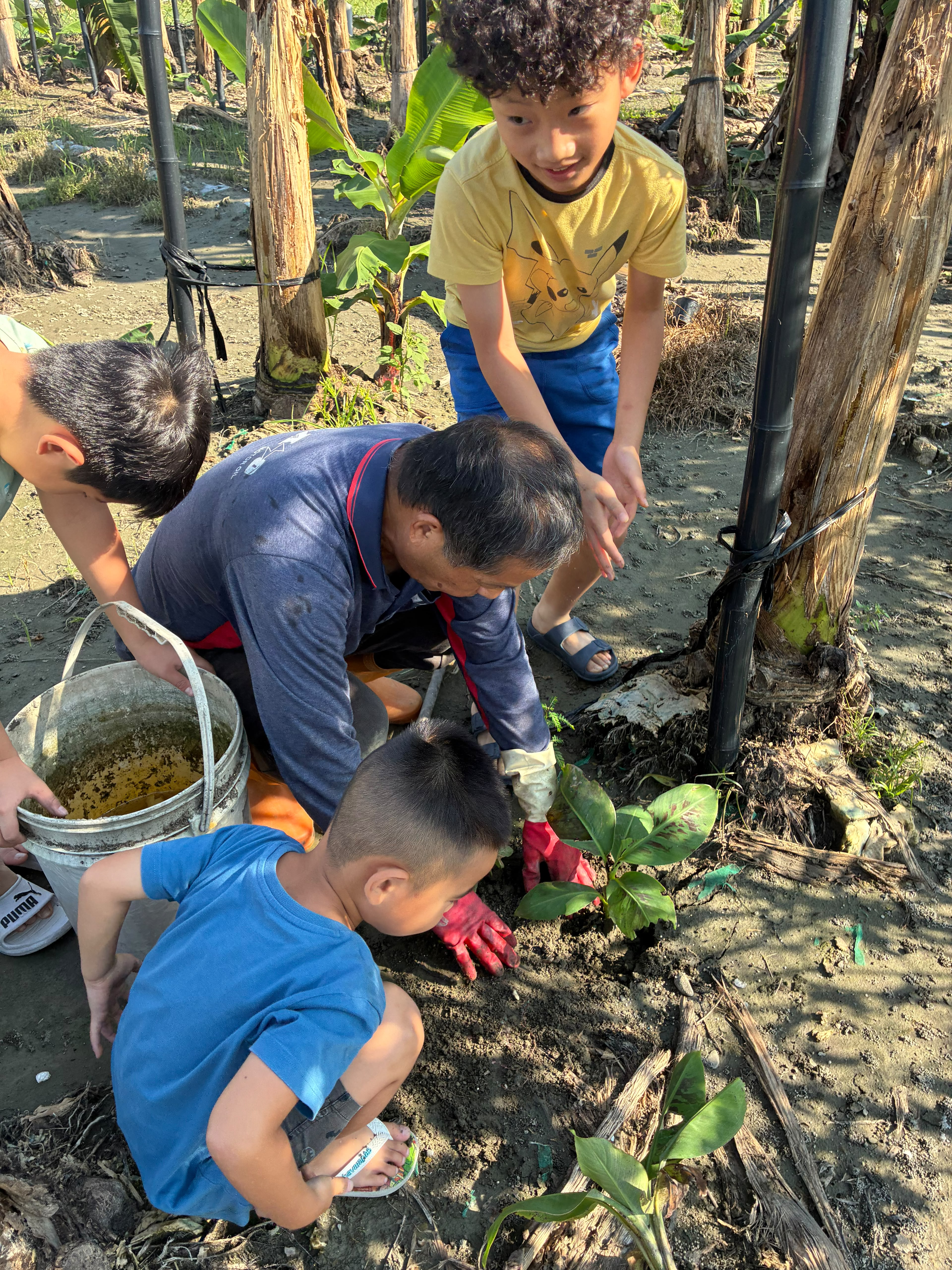
Working alongside local students, participants planted 80+ banana trees while learning about sustainable agriculture and regenerative farming practices. Through this hands-on experience, students were able to see firsthand how responsible agricultural practices can support environmental health and contribute to the long-term sustainability of local communities.
The project aimed to connect environmental education with meaningful action. By participating directly in the planting process, students gained practical experience while developing a deeper understanding of their relationship with the environment and the role they can play in protecting it.
Seeds for Change in Taiwan reflects Give Earth a Smile's belief that young people should not only learn about environmental challenges but also be empowered to become part of the solution. By creating opportunities for students to engage directly with their communities and the natural environment, we hope to inspire a generation of environmentally conscious leaders who are ready to take action for a more sustainable future.
Project Objective
Provide students in Gaoshu Township, Pingtung County, Taiwan with hands-on opportunities to learn about sustainable agriculture and regenerative farming while actively participating in environmental restoration and developing a greater sense of responsibility toward the environment.
Challenges and Opportunities
- Limited opportunities for students to engage directly with environmental restoration and sustainable agriculture.
- A need to increase awareness of regenerative farming practices and their role in creating healthier ecosystems.
- Opportunities for students to learn about environmental stewardship through hands-on experiences.
- Rural communities can provide meaningful settings for students to connect with agriculture, nature, and environmental responsibility.
- Hands-on environmental projects can help students understand how their actions can contribute to long-term ecological sustainability.
- Students can become active participants in environmental restoration rather than simply learning about environmental challenges in a classroom.
- Schools and local communities can work together to encourage environmental awareness and sustainable practices among younger generations.
Proposed Solution
- ✓Organize a hands-on environmental restoration project at a rural farm in Gaoshu Township, Pingtung County.
- ✓Bring students together to participate directly in environmental restoration and agricultural activities.
- ✓Plant more than 80 banana trees alongside local students.
- ✓Teach students about sustainable agriculture and regenerative farming practices.
- ✓Provide students with hands-on opportunities to understand the relationship between agriculture, environmental stewardship, and ecosystem health.
- ✓Encourage students to take ownership of environmental action within their communities.
- ✓Create opportunities for students to contribute directly to a greener and more sustainable future.
Project Benefits
Environmental Restoration
Students directly contributed to restoring a rural farm by planting more than 80 banana trees.
Sustainable Agriculture
Students learned how environmentally responsible farming practices can support communities and protect natural resources.
Regenerative Farming
Students were introduced to agricultural approaches designed to support long-term ecosystem health and sustainability.
Student Environmental Action
Participants moved beyond learning about environmental challenges and became active contributors to environmental solutions.
Implementation Phases
Planning and Coordination
The rural farm and project location were identified, local students and community partners were coordinated, environmental restoration activities were determined, and planting plans and educational materials were prepared.
Preparation and Environmental Education
The farm and planting area were prepared, banana trees and planting materials were organized, and students were introduced to sustainable agriculture, regenerative farming, environmental restoration, and responsible land management.
Hands-On Environmental Restoration
Students gathered at the rural farm and participated directly in environmental restoration by planting more than 80 banana trees while connecting hands-on planting with lessons about sustainable agriculture and regenerative farming.
Continued Environmental Awareness and Action
Students were encouraged to apply their understanding of sustainability within their communities, continue engaging with environmental issues, and reinforce lessons about regenerative farming and responsible environmental stewardship.
Project Activity Plan
Activity 1
Hands-On Environmental Restoration
Students directly participated in restoring the rural farm by planting more than 80 banana trees and gaining practical environmental experience.
Activity 2
Sustainable Agriculture Education
Students learned about the relationship between farming practices and environmental health while connecting educational concepts with real-world agriculture.
Activity 3
Regenerative Farming Practices
Students learned how regenerative approaches to agriculture can support natural ecosystems and long-term environmental sustainability.
Activity 4
Empowering Students Through Environmental Action
Students were encouraged to see themselves as environmental stewards and recognize that individual and collective action can create lasting change.